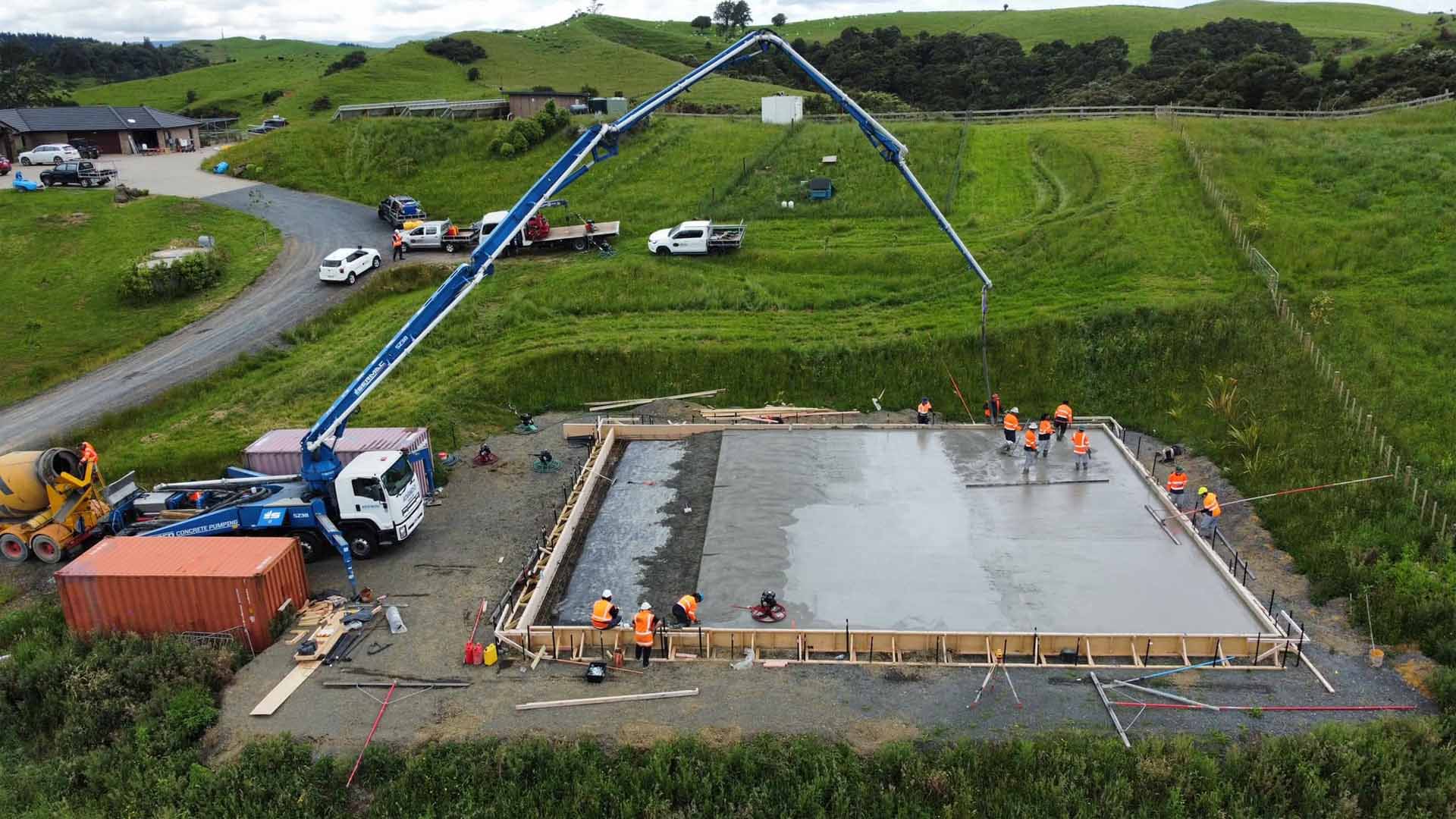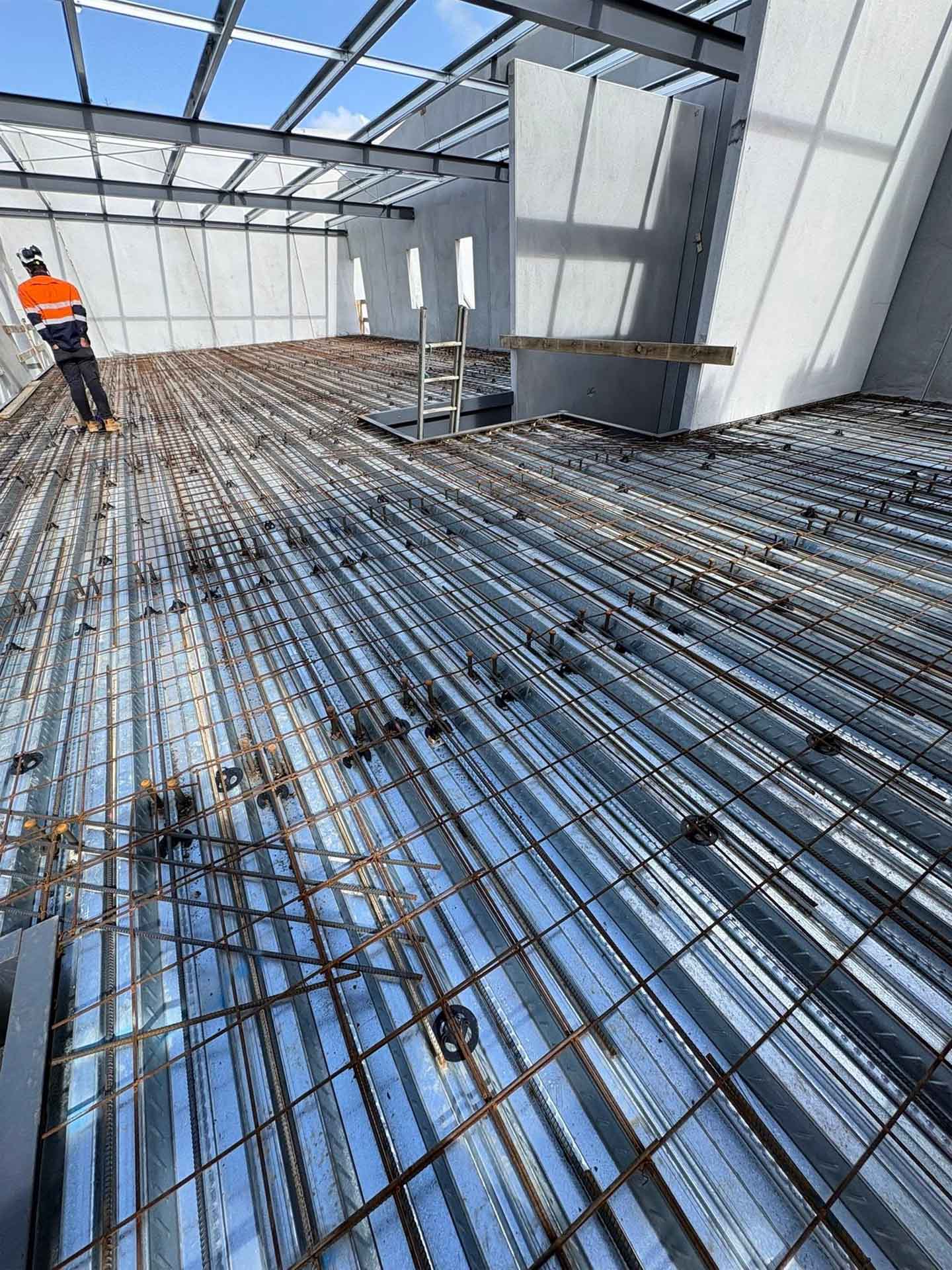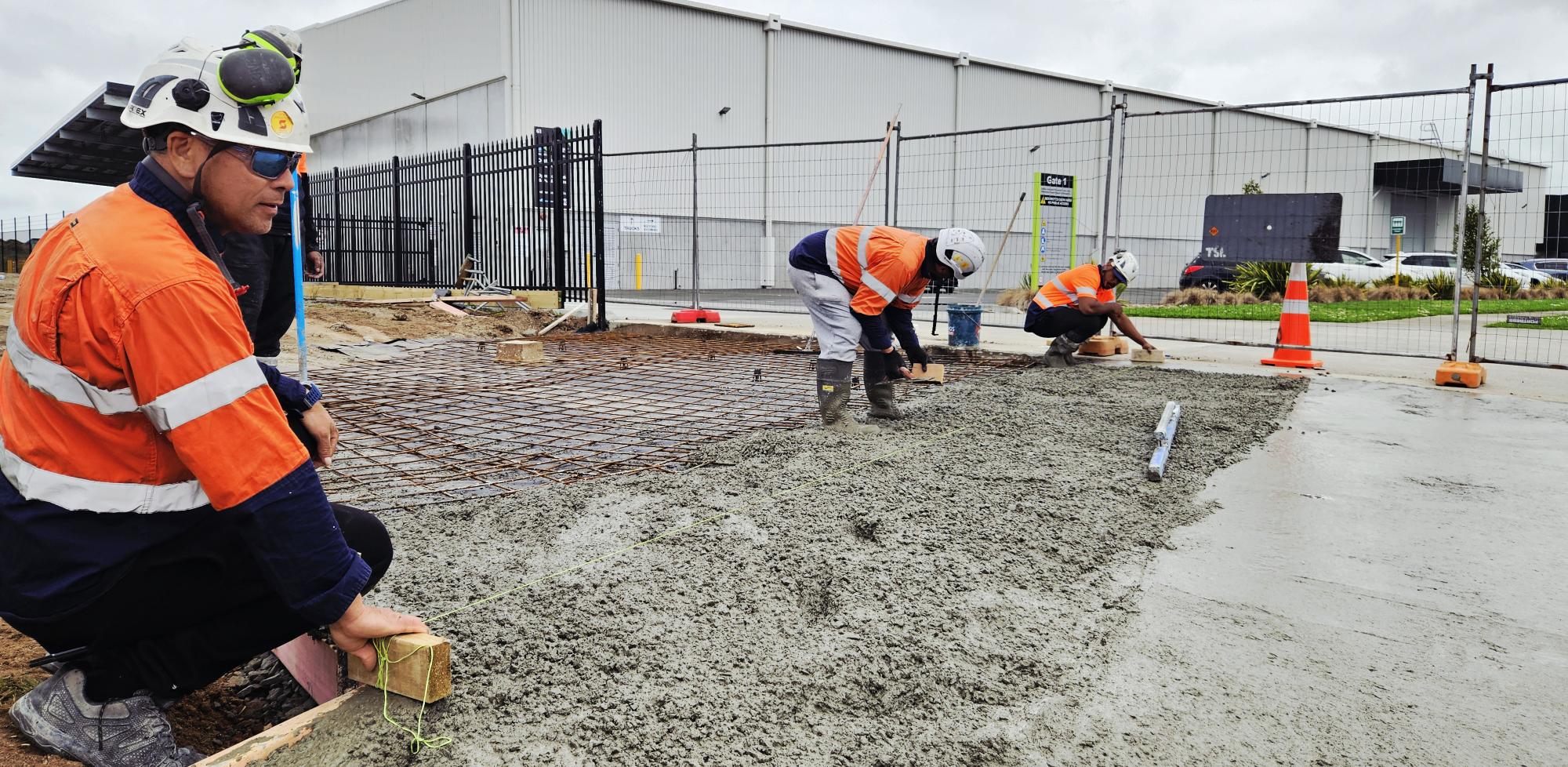


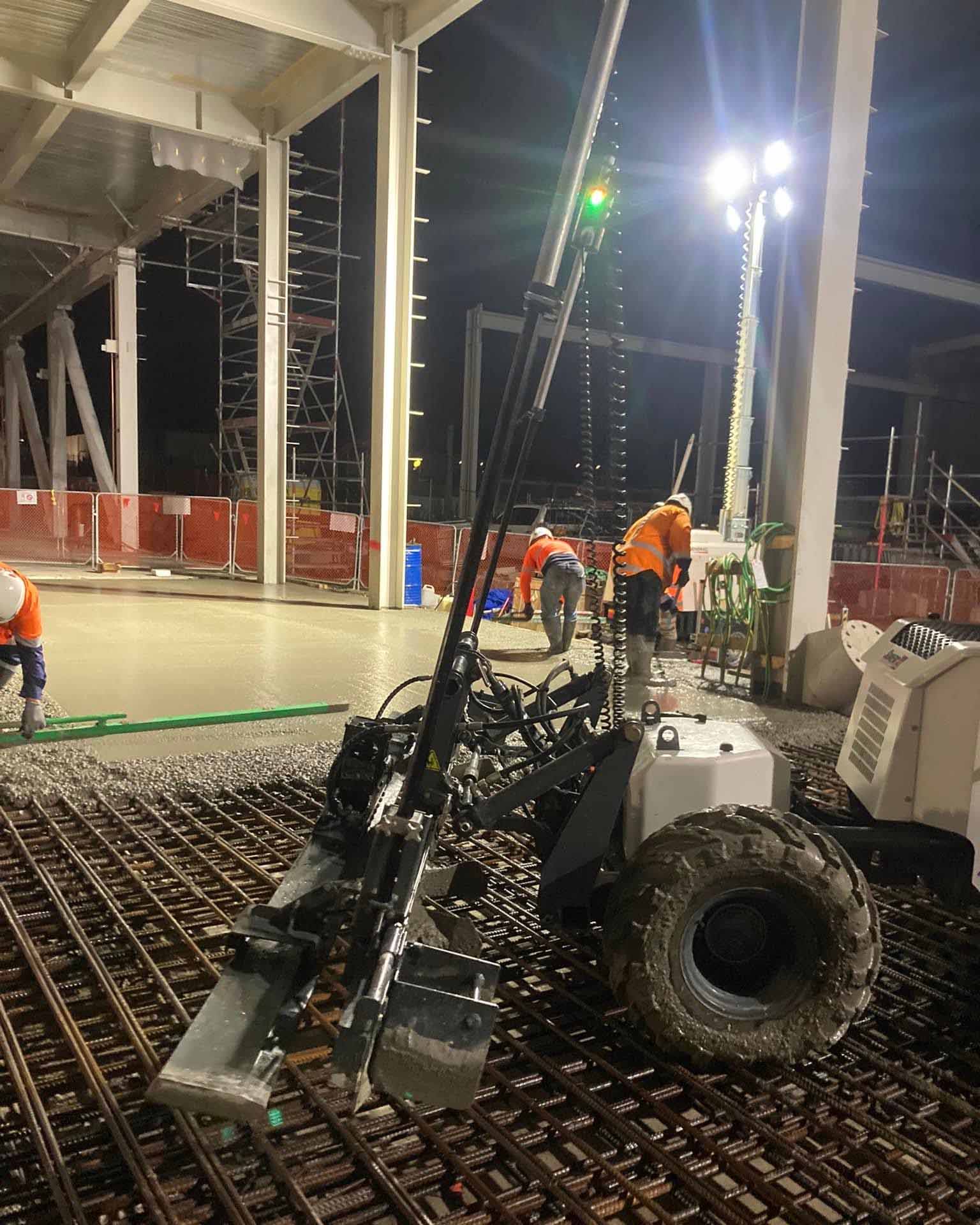
A flat floor starts long before the trowels come out. On a large commercial pour, the screed sets the level for everything that follows. Here’s what a laser screed does, and when it’s the right call.
What a Laser Screed Does
A laser screed is a machine that strikes off and levels freshly placed concrete. A laser transmitter sets a fixed reference level across the site. Receivers on the screed head read that level and adjust the head automatically as it moves over the concrete.
The surface is levelled to the laser, not to the eye. The machine holds the same level from the first pass to the last.
Why It Matters on Large Floors
Hand screeding works well on small slabs. Across a large floor, small variations add up, and they show in the finished surface.
A laser screed keeps the level consistent over the whole pour. It also covers ground faster than hand screeding, which matters when the trucks are arriving and the concrete won’t wait.
Less heavy manual screeding means a fresher crew when it’s time to finish.
When You Need One
A laser screed earns its place on:
- Warehouse and logistics floors with large open areas
- Floors with tight flatness and levelness specs, such as racking and forklift areas
- Big pours on a tight programme
On small slabs, tight access or awkward shapes, a roller screed or hand methods can be the better fit. The right gear depends on the job.
We don’t just bring machinery to site. We bring people who know how to use it.
The Machine Is Only Half of It
A laser screed won’t fix poor preparation. Setup, concrete supply, timing and the operator still decide the result.
CCSL owns and maintains its Somero laser screeds in-house. The gear is serviced, ready when the pour is, and run by our own crew.
Got a Pour Coming Up?
Talk to CCSL about your programme and spec. We’ll tell you what gear the job needs.